
Important Safety Information
Infections: Fatal and serious infections (including bacterial, viral, fungal) and opportunistic infections occurred in Jaypirca-treated patients. Across clinical trials, Grade ≥3 infections occurred (25%), most commonly pneumonia (20%); fatal infections (5%), sepsis (6%), and febrile neutropenia (3.8%) occurred. In patients with CLL/SLL, Grade ≥3 infections occurred (32%), with fatal infections occurring in 8%. Opportunistic infections included Pneumocystis jirovecii pneumonia and fungal infection. Consider prophylaxis, including vaccinations and antimicrobial prophylaxis, in patients at increased risk for infection, including opportunistic infections. Monitor for signs and symptoms, evaluate, and treat. Based on severity, reduce dose, temporarily withhold, or permanently discontinue Jaypirca.
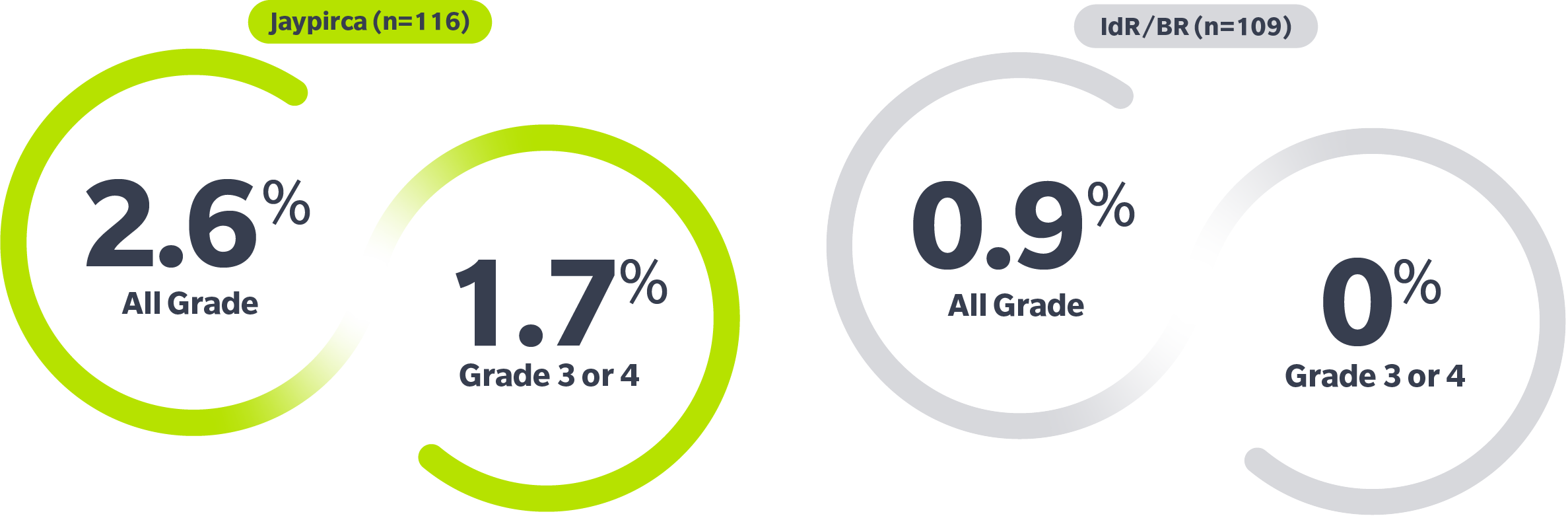
Hemorrhage: Fatal and serious hemorrhage has occurred with Jaypirca. Across clinical trials, major hemorrhage (Grade ≥3 bleeding or any central nervous system bleeding) occurred (2.6%), including gastrointestinal hemorrhage; fatal hemorrhage occurred (0.3%). Bleeding of any grade, excluding bruising and petechiae, occurred (16%). Major hemorrhage occurred when taking Jaypirca with (2.0%) and without (0.6%) antithrombotic agents. Consider risks/benefits of co-administering antithrombotic agents with Jaypirca. Monitor for signs of bleeding. Based on severity, reduce dose, temporarily withhold, or permanently discontinue Jaypirca. Consider withholding Jaypirca 3-7 days pre- and post-surgery based on surgery type and bleeding risk.
Cytopenias: Jaypirca can cause cytopenias, including neutropenia, thrombocytopenia, and anemia. Across clinical trials, Grade 3 or 4 cytopenias, including decreased neutrophils (27%), decreased platelets (13%), and decreased hemoglobin (11%), developed. Grade 4 decreased neutrophils (15%) and Grade 4 decreased platelets (6%) developed. Monitor complete blood counts regularly. Based on severity, reduce dose, temporarily withhold, or permanently discontinue Jaypirca.
Cardiac Arrhythmias: Cardiac arrhythmias occurred in patients taking Jaypirca. Across clinical trials, atrial fibrillation or flutter were reported in 3.4% of Jaypirca-treated patients, with Grade 3 or 4 atrial fibrillation or flutter in 1.6%. Other serious cardiac arrhythmias such as supraventricular tachycardia and cardiac arrest occurred (0.4%). Cardiac risk factors such as hypertension or previous arrhythmias may increase risk. Monitor and manage signs and symptoms of arrhythmias (e.g., palpitations, dizziness, syncope, dyspnea). Based on severity, reduce dose, temporarily withhold, or permanently discontinue Jaypirca.
Second Primary Malignancies: Across clinical trials, second primary malignancies, including non-skin carcinomas, developed in 9% of Jaypirca-treated patients, most frequently non-melanoma skin cancer (4.4%). Other second primary malignancies included solid tumors (including genitourinary and breast cancers) and melanoma. Advise patients to use sun protection and monitor for development of second primary malignancies.
Hepatotoxicity, Including Drug-Induced Liver Injury (DILI): Hepatotoxicity, including severe, life-threatening, and potentially fatal cases of DILI, has occurred in patients treated with BTK inhibitors, including Jaypirca. Evaluate bilirubin and transaminases at baseline and throughout Jaypirca treatment. For patients who develop abnormal liver tests after Jaypirca, monitor more frequently for liver test abnormalities and clinical signs and symptoms of hepatic toxicity. If DILI is suspected, withhold Jaypirca. If DILI is confirmed, discontinue Jaypirca.
Embryo-Fetal Toxicity: Jaypirca can cause fetal harm. Administration of pirtobrutinib to pregnant rats caused embryo-fetal toxicity, including embryo-fetal mortality and malformations at maternal exposures (AUC) approximately 3-times the recommended 200 mg/day dose. Advise pregnant women of fetal risk and females of reproductive potential to use effective contraception during treatment and for one week after last dose.
Adverse Reactions (ARs) in Patients Who Received Jaypirca
The most common (≥30%) ARs in the pooled safety population of patients with hematologic malignancies (n=704) were decreased neutrophil count (54%), decreased hemoglobin (43%), decreased leukocytes (32%), fatigue (31%), decreased platelets (31%), decreased lymphocyte count (31%), calcium decreased (30%).
Mantle Cell Lymphoma
Serious ARs occurred in 38% of patients, with pneumonia (14%), COVID-19 (4.7%), musculoskeletal pain (3.9%), hemorrhage (2.3%), pleural effusion (2.3%), and sepsis (2.3%) occurring in ≥2% of patients. Fatal ARs within 28 days of last dose occurred in 7% of patients, most commonly due to infections (4.7%), including COVID-19 (3.1% of all patients).
Dose Modifications and Discontinuations Due to ARs: Dose reductions in 4.7%, treatment interruption in 32%, and permanent discontinuation of Jaypirca in 9% of patients. Permanent discontinuation in >1% of patients included pneumonia.
Most common ARs (≥15%) and Select Laboratory Abnormalities (≥10%) (all Grades %; Grade 3-4 %): hemoglobin decreased (42; 9), platelet count decreased (39; 14), neutrophil count decreased (36; 16), lymphocyte count decreased (32; 15), creatinine increased (30; 1.6), fatigue (29; 1.6), musculoskeletal pain (27; 3.9), calcium decreased (19; 1.6), diarrhea (19; -), edema (18; 0.8), dyspnea (17; 2.3), AST increased (17; 1.6), pneumonia (16; 14), bruising (16; -), potassium decreased (13; 1.6), sodium decreased (13; -), lipase increased (12; 4.4), ALT increased (11; 1.6), potassium increased (11; 0.8), alkaline phosphatase increased (11; -). Grade 4 laboratory abnormalities in >5% of patients included neutrophils decreased (10), platelets decreased (7), lymphocytes decreased (6).
Chronic Lymphocytic Leukemia/Small Lymphocytic Lymphoma from Single-Arm and Randomized Controlled Clinical Trials
Serious ARs occurred in 47-56% of patients across clinical trials. Serious ARs in ≥5% of patients in the single-arm trial were pneumonia (18%), COVID-19 (9%), sepsis (7%), febrile neutropenia (7%). Serious ARs in ≥3% of patients in the randomized controlled trial were pneumonia (21%), COVID-19 (5%), sepsis (3.4%). Fatal ARs within 28-30 days of last Jaypirca dose occurred in 8-11% of patients, most commonly due to infections (7- 10%), including sepsis (5%), COVID-19 (2.7-5%), and pneumonia (3.4%).
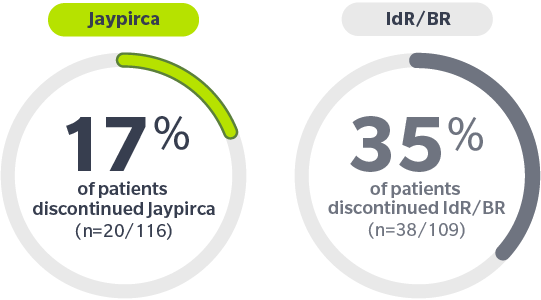
Dose Modifications and Discontinuations Due to ARs: Dose reductions in 3.6-10%, treatment interruption in 42-51%, and permanent discontinuation of Jaypirca in 9-17% of patients. Permanent discontinuation in >1% of patients included second primary malignancy, pneumonia, COVID-19, neutropenia, sepsis, anemia, and cardiac arrhythmias.

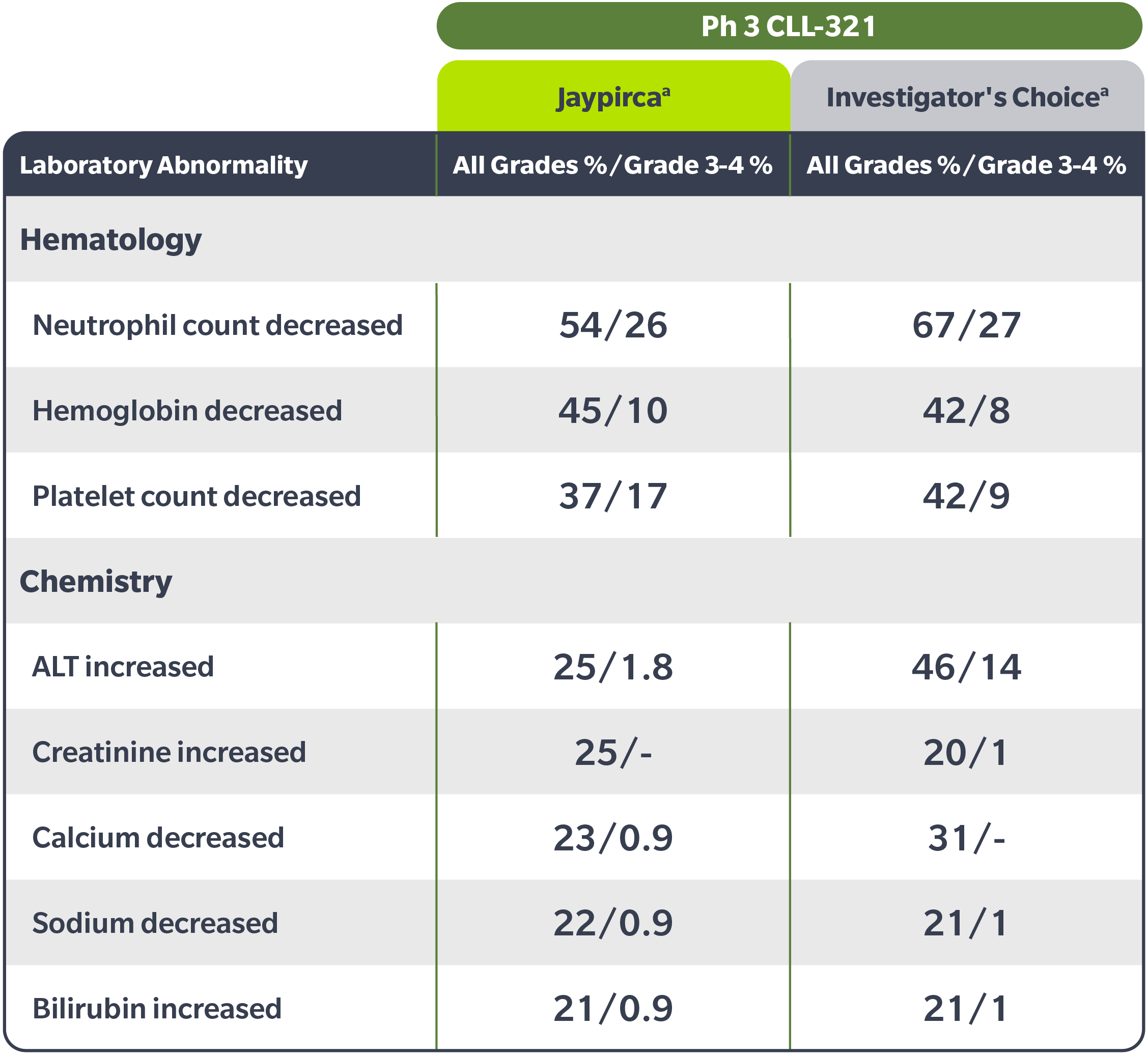
Most common ARs and Select Laboratory Abnormalities (≥20%) (all Grades %, Grade 3-4 %)--in a randomized controlled trial: neutrophil count decreased (54; 26), hemoglobin decreased (45; 10), platelet count decreased (37; 17), pneumonia (28; 16), ALT increased (25; 1.8), creatinine increased (25; -), calcium decreased (23; 0.9), sodium decreased (22; 0.9), bilirubin increased (21; 0.9), upper respiratory tract infections (21; 0.9); in a single-arm trial: neutrophil count decreased (63; 45), hemoglobin decreased (48; 19), calcium decreased (40; 2.8), fatigue (36; 2.7), bruising (36; -), cough (33; -), musculoskeletal pain (32; 0.9), platelet count decreased (30; 15), sodium decreased (30; -), COVID-19 (28; 7), pneumonia (27; 16), diarrhea (26; -), abdominal pain (25; 2.7), lymphocyte count decreased (23; 8), ALT increased (23; 2.8), AST increased (23; 1.9), creatinine increased (23; -), dyspnea (22; 2.7), hemorrhage (22; 2.7), lipase increased (21; 7), alkaline phosphatase increased (21; -), edema (21; -), nausea (21; -), pyrexia (20; 2.7), headache (20; 0.9). Grade 4 laboratory abnormalities in >5% of patients included neutrophils decreased (23).
Drug Interactions
Strong CYP3A Inhibitors: Concomitant use increased pirtobrutinib systemic exposure, which may increase risk of Jaypirca ARs. Avoid using strong CYP3A inhibitors with Jaypirca. If concomitant use is unavoidable, reduce Jaypirca dose according to approved labeling.
Strong or Moderate CYP3A Inducers: Concomitant use decreased pirtobrutinib systemic exposure, which may reduce Jaypirca efficacy. Avoid using Jaypirca with strong or moderate CYP3A inducers. If concomitant use with moderate CYP3A inducers is unavoidable, increase Jaypirca dose according to approved labeling.
Sensitive CYP2C8, CYP2C19, CYP3A, P-gp, or BCRP Substrates: Use with Jaypirca increased their plasma concentrations, which may increase risk of ARs related to these substrates for drugs sensitive to minimal concentration changes. Follow recommendations for these sensitive substrates in their approved labeling.
Use in Specific Populations
Pregnancy and Lactation: Due to potential for Jaypirca to cause fetal harm, verify pregnancy status in females of reproductive potential prior to starting Jaypirca. Presence of pirtobrutinib in human milk is unknown. Advise women to use effective contraception and to not breastfeed while taking Jaypirca and for one week after last dose.
Geriatric Use: In the pooled safety population of patients with hematologic malignancies, patients aged ≥65 years experienced higher rates of Grade ≥3 ARs and serious ARs compared to patients <65 years of age.
Renal Impairment: Because severe renal impairment increases pirtobrutinib exposure, reduce Jaypirca dose in these patients according to approved labeling.
PT HCP ISI MCL_CLL Q42025
Please see full Prescribing Information and Patient Information for Jaypirca.